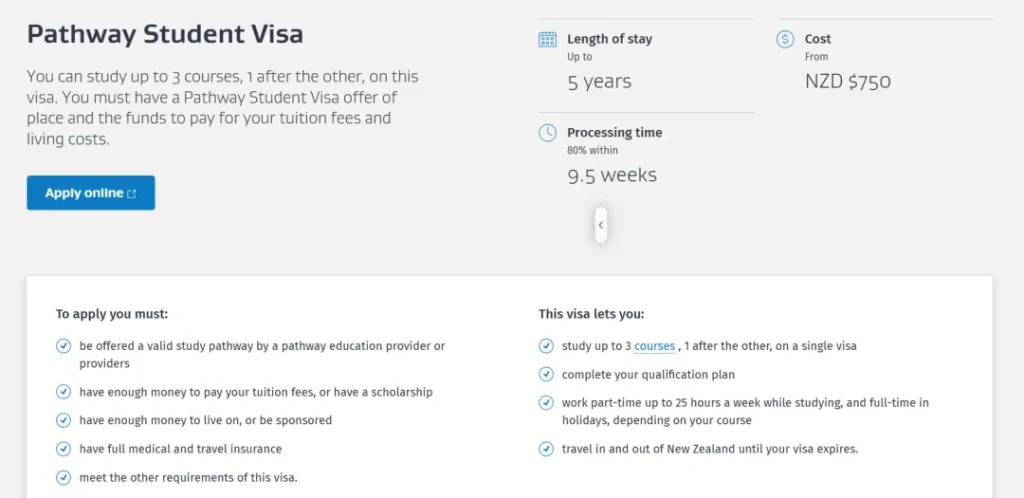
高中生不再需要提前锁定具体的大学或高等课程,只需确认未来计划学习的资格等级,以及打算就读的教育机构即可。The PSV will provide more flexibility for secondary school students (Years 12 and 13). Students will not need to name an exact tertiary course when they apply. They will need to confirm the qualification level they plan to study, and which education provider they intend to study with.解读:很多高中生对未来专业方向并不确定。旧政策下想换专业可能需要重新申请签证,流程繁琐。新政让学生可以更从容地探索兴趣方向,不必在签证阶段就被绑定选择,给学生更多的灵活空间。
变化二:低等级学习路径也能衔接
PSV将在较低层次提供更多学习路径。学生将能够利用PSV进行通向或介于新西兰资格与证书框架(NZQCF)1级至4级的学习路径。这包括英语学习、基础课程和职业证书。The PSV will provide more study pathways at lower levels. Students will be able to use the PSV for study pathways that lead to, or move between, the New Zealand Qualifications and Credentials Framework (NZQCF) levels 1 to 4. This includes English language study, foundation programmes, and vocational certificates.解读:新政打破了学历层次壁垒——无论你是先读语言再读预科最后升本科,还是从职业证书(如护理、幼教证书)起步,都可以全程使用同一张PSV。这特别利好两类人群:
英语基础薄弱的学生:可安心完成语言课程再无缝衔接主课,无需匆忙续签。
职业教育路径的学生:新西兰职业教育就业前景极佳,新政让这些”实用型”专业也能享受PSV便利。
变化三:英语学习时间从20周延长至30周
PSV将提供更多时间完成英语学习。部分首次获得PSV的学生可转入NZQCF 1至8级,在开始下一次资格考试前学习英语最多30周。The PSV will provide more time to complete English language study. Some first-time PSV holders moving to NZQCF levels 1 to 8 will be able to spend up to 30 weeks studying English before starting their next qualification. This is an increase from 20 weeks.解读:20周英语课程对许多中国学生往往不够用。语言是留学成功的基础,准备不充分就仓促进入主课,不仅影响成绩还可能面临挂科风险。现在多了10周缓冲期,学生可以更扎实打好语言基础,也为参加雅思、PTE等考试留出更充足备考时间。